Everyone has their own version
Several people use the same tool, each on a copy that drifted a bit further. Nobody dares to merge, and results are getting hard to compare across the team.
I'm Marine Guyot, a freelance research software engineer. I turn the code your lab shares, and the code you're about to publish, into something reproducible, reliable and yours to maintain.
Get a free first look at your code See what I've built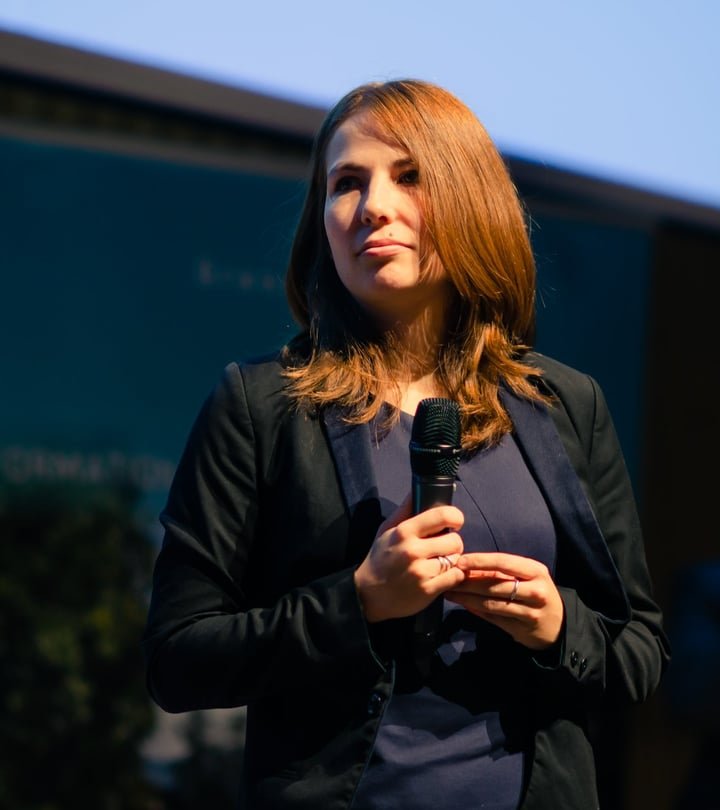
When labs call me
Your code works well enough for one person, one experiment, one paper. Then something changes.
Several people use the same tool, each on a copy that drifted a bit further. Nobody dares to merge, and results are getting hard to compare across the team.
A new instrument, a new probe, more users, more data. The script that did the job needs to become a tool the whole group can rely on.
More and more journals require the code behind your results. Nature journals ask for a Code availability section and can send your code to reviewers. Is yours ready to be read, run and cited?
Building a company out of your lab work? Before incorporation, I help founders do a bit more research on the points still open, or take an existing project to production.
"We'll just do it with AI"
Yes, you can. AI makes a great proof of concept. But when it's time to publish, you need something solid, something you can build on for years. I use AI too. The difference is what goes around it.
In a 2026 study of 527 researchers who code with AI, only 3% mentioned automated tests and 2% a review by someone else: How Researchers Use and Verify AI Coding Assistants. On parameters changed without noticing: O'Brien, CHI 2025.
A proof of concept is a start. What you publish has to hold.
Confidentiality comes first. I use Claude only when you agree to it and when it makes sense for what we're building. Otherwise, I work with local models, so your code and data never go to a third-party service.
What you get
Same inputs, same results, on another machine, a year later, for a reviewer. Pinned environments, versioned releases, a clear link between the paper and the code.
Tests where they count, bugs found before a reviewer finds them, and a code structure that holds when the instrument or the protocol changes.
Your team understands it, can extend it and doesn't depend on me. Documentation, handover, and a codebase built on patterns that last.
Selected work
Legacy code rebuilt into a modular, containerized system: researchers deploy their own experiments on the device and trigger them from a web app.
Two long-diverged branches reconciled, a latency bug fixed, and every student's experiment protocol kept working.
Instead of a one-off data format, an Open Ephys plugin in C++ and a real-time visualization app for high channel counts.
Several machine-learning approaches on young children's eye-tracking data, designed and compared with the lab's own analysis.
“The flexibility and responsiveness allowed us to move quickly on targeted milestones, while benefiting from high-level architectural thinking and strong ownership of deliverables without the overhead of a traditional hire.”
“I had the pleasure of working with Marine on a new cutting-edge neural implant I develop for neuroscience research. I needed a software solution to acquire data through a National Instruments setup and she suggested the perfect approach: leveraging the accessibility of the Open Ephys platform, she coded a plugin and GUI tailored to our specific needs. She showed excellent skills in balancing complex hardware constraints and great user experience. I highly recommend working with her!”
How it works
Engagements from a few days to a few weeks, sized to fit a lab's operating budget. Remote, across France, Belgium, Switzerland, the rest of Europe and the US.
You show me the code and what hurts. I tell you honestly whether I can help.
What I'll deliver, in how many days, and what it won't cover.
Regular check-ins with the people who use the code, not just the PI.
Documentation and a walkthrough, so your team owns the result.
Running a doctoral school or a training programme? I also give workshops on research code.
Tell me about your code and what's getting in the way of your research.
marine@codingresearcher.com